


Advice
Frequently asked questions
Answers to the questions we are asked most often about the Vincentka range. They are all here, on one page. If yours is not among them, write to us — we will gladly answer.
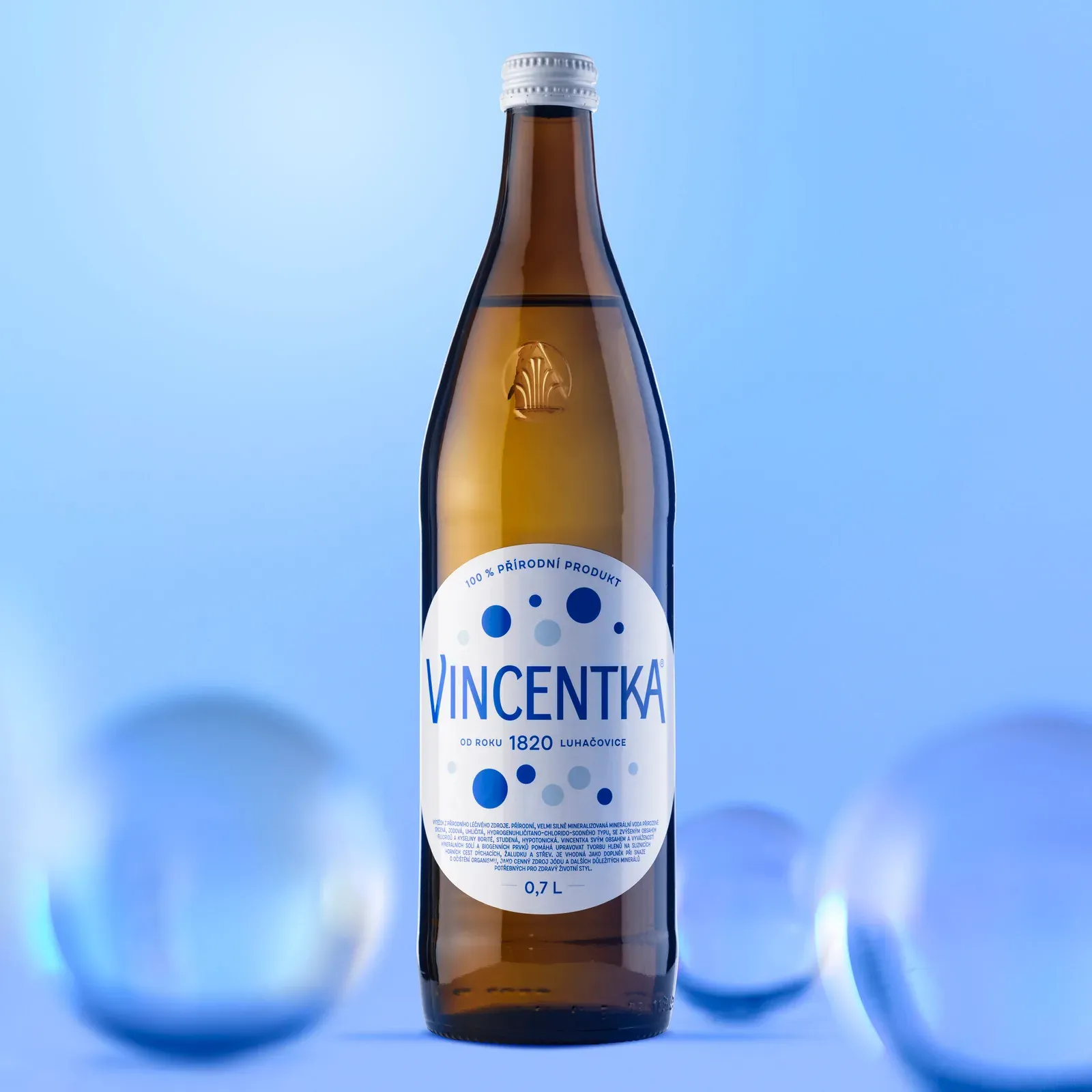
How do I inhale Vincentka properly?
Inhalation is most effective with an inhaler. Vincentka recommends inhalers from OMRON, which we also offer in our e-shop at favourable prices. They are simple to use and need only a small amount of solution, all of which is used. The greatest effect comes with a mask over the mouth and nose, which makes for a genuinely thorough inhalation.
What do I do if I have no inhaler?
Pour Vincentka into a stainless steel pot (about 2–3 cm) and heat it slowly until steam starts to rise — it must not boil. When the steam comes, put a towel over your head and lean carefully over the pot, far enough away not to scald yourself. Then simply breathe normally for five to ten minutes. Take great care not to scald or burn yourself on the hot pot, and never let children inhale unsupervised.
How long can I use Vincentka after opening the bottle?
It should be used within ten days of opening at the latest, and that assumes the natural carbon dioxide has not escaped entirely and that salt crystals have not started to form in the bottle. Much depends on how often it is opened and how well it is closed; a bottle with a screw cap, kept cool and dark, suits it best. Even so, it is best used within two days of opening.
Does boiling Vincentka — driving off the bubbles — change its quality?
Boiling crystallises the minerals and trace elements and makes them hard for the body to absorb. The taste changes too. The bubbles, that is the natural carbon dioxide — Vincentka is not carbonated artificially — have their place in the make-up of the water and hold its chemical composition in balance. Anyone who does not tolerate carbon dioxide can stir the bubbles out while the water is cold, but must then use it quickly.
Can I drink Vincentka during pregnancy?
Vincentka is recommended during pregnancy for its natural iodine and other minerals, which have a favourable influence on its course. Bear in mind, though, that it also contains salt, which is worth limiting during pregnancy — so while drinking Vincentka, salt other food less. The usual daily amount is 200–300 ml. As to how much a day, we recommend consulting your doctor.
Is Vincentka suitable for infants, and how should it be dosed?
Among other things, Vincentka contains a considerable amount of iodine. The dosage must be discussed with a doctor.
With so much salt, can Vincentka affect the heart and blood vessels?
Vincentka is not a water for quenching thirst. It is drunk as a support in replacing minerals and trace elements. It works like any other food: while drinking Vincentka, leave out food with a higher salt content at the same time. When mineral salts are being lost heavily — during diarrhoea or physical exertion — salt intake need not be limited at all.
Why is Vincentka not sold in returnable bottles?
Our bottles are made as non-returnable, so they use 30 % less glass than a returnable bottle, which saves raw material and energy in production and fuel in transport. About half of our output is sold in pharmacies, which do not want to take returnable bottles back. We are a very small producer and could not run a returnable cycle at an acceptable cost, and washing bottles takes a great deal of energy. If our bottle reaches sorted waste, it is certain to be recycled — and the glass it is made from already contains 70 % recycled material.
Why do you not sell Vincentka in PET bottles?
Vincentka is a highly mineralised natural medicinal water, unique in Europe in its composition. We want to keep that quality as nature offers it. Vintage wine does not belong in a PET bottle either.
Where can I buy Vincentka?
Vincentka is available in every pharmacy in Czechia. Food shops can order it from beverage wholesalers, though only some do — usually Albert, Tesco, Kaufland, COOP, Hruška, Globus and InterSpar.
How much Vincentka and water go into an inhaler, and for how long should I inhale?
The method and the duration of inhalation must be discussed with a doctor.
Are Vincentka bottles returnable?
Since May 2005 Vincentka has been filled only into non-returnable bottles. The bottle is made of thin-walled glass and belongs in the glass container after use.
How long does an opened bottle last for inhalation and nasal rinsing?
Vincentka should be used within ten days of opening at the latest, and that assumes the natural carbon dioxide has not escaped entirely and that salt crystals have not started to form in the bottle. For better keeping, a brown glass bottle with a screw cap is preferable; they are sold in pharmacies and in some food shops.
Has the taste of Vincentka changed over the years?
Yes, it may well have, and three things lie behind it. Packaging — between 1977 and 1988 Vincentka was sold in a hardened PVC bottle with aluminium foil instead of a cap. That packaging was entirely unsuited to carbonated water: the carbon dioxide escaped quickly, the water oxidised in the bottle and its taste changed markedly. Today we use glass bottles with a screw cap, which keep it best. Iron content — since 1995 the iron has been removed, because it oxidised in the bottle and formed a sediment. Iron has a taste of its own, which does not suit everybody; on the colonnade in Luhačovice you can have Vincentka with its iron and compare. Production technology — filling today is on a different level than forty years ago. The whole line is stainless steel and the process is entirely closed, which keeps oxygen away and with it any oxidation or change in the chemical composition.
Did not find your answer?
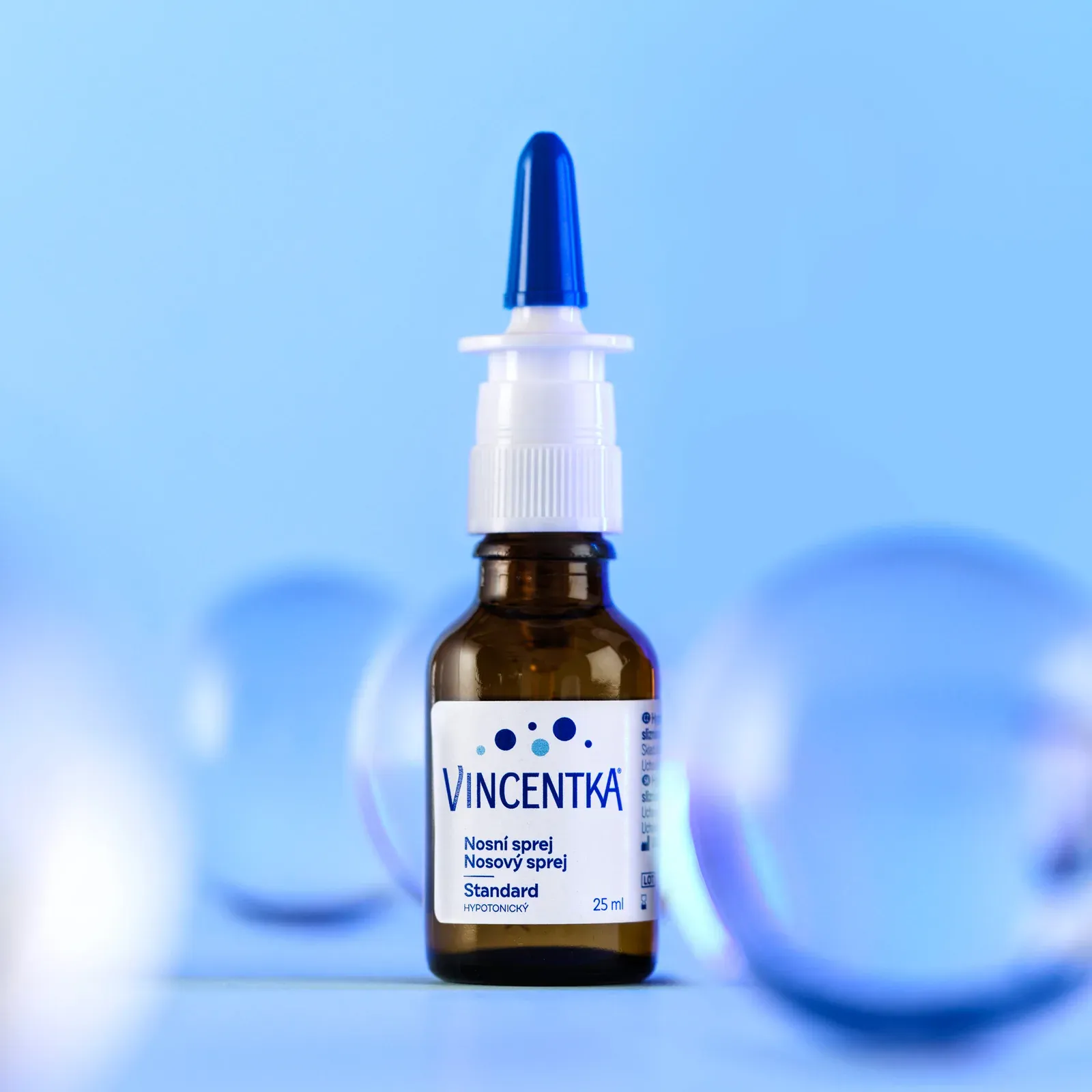
The Vincentka nasal spray is hypotonic, so why can it be used long term and not just for a fortnight, as is usual with hypotonic sprays?
The boundary between an isotonic and a hypotonic solution is 300 mmol (the osmolality of blood plasma). Vincentka measures 265 mmol, and even that figure can drift slightly, so it is only mildly hypotonic. What makes the Luhačovice mineral waters exceptional is the balance between the sodium chloride component and the sodium hydrogen carbonate component, which comes from the original sea water. We have studies and reviews from ENT specialists comparing how well hyper-, iso- and hypotonic solutions are tolerated when used for rinsing and spraying. Apart from patients with an acutely blocked nose during a cold, patients rated the hypertonic solution as the worst tolerated. Between the hypotonic solution — Vincentka — and the isotonic one there was no significant difference. Vincentka came out as the best tolerated, among other things because even after prolonged use it causes none of the side effects of vasoconstrictive drops, the so-called alpha sympathomimetics.
Does the Vincentka nasal spray help with pollen allergies too?
The Vincentka nasal spray helps maintain the physiological cleansing capacity of the nasal lining and lets mucosal immunity work at its best. As far as we know, allergists recommend it for managing the troubles of pollen and dust allergies, and users of the spray report very positive results to us. There is no limit on how long or how often a day the Vincentka nasal spray may be used. The spray can be refilled with Vincentka from the original 0.7 l bottle — see the package leaflet.
Is the Vincentka nasal spray suitable for pregnant women?
Since the spray is filled with pure Vincentka mineral water from a natural medicinal spring with nothing added, its use is not restricted. For pregnant women it is on the contrary a very suitable natural remedy: it favourably influences the body’s defences as prevention and helps with the feeling of a dried-out nasal lining during pregnancy.
Can I use the Vincentka nasal spray on a ten-month-old child?
Since this is pure mineral water from a natural medicinal spring with nothing added, it can be used in infants too, but great care is needed during application so as not to injure the child. It is best used without inserting the spray into the nostril, holding it close instead.
Does the Vincentka nasal spray help after surgery of the nasal lining and the septum?
As far as we know, doctors recommend the Vincentka nasal spray directly to patients preparing for such operations.
Did not find your answer?
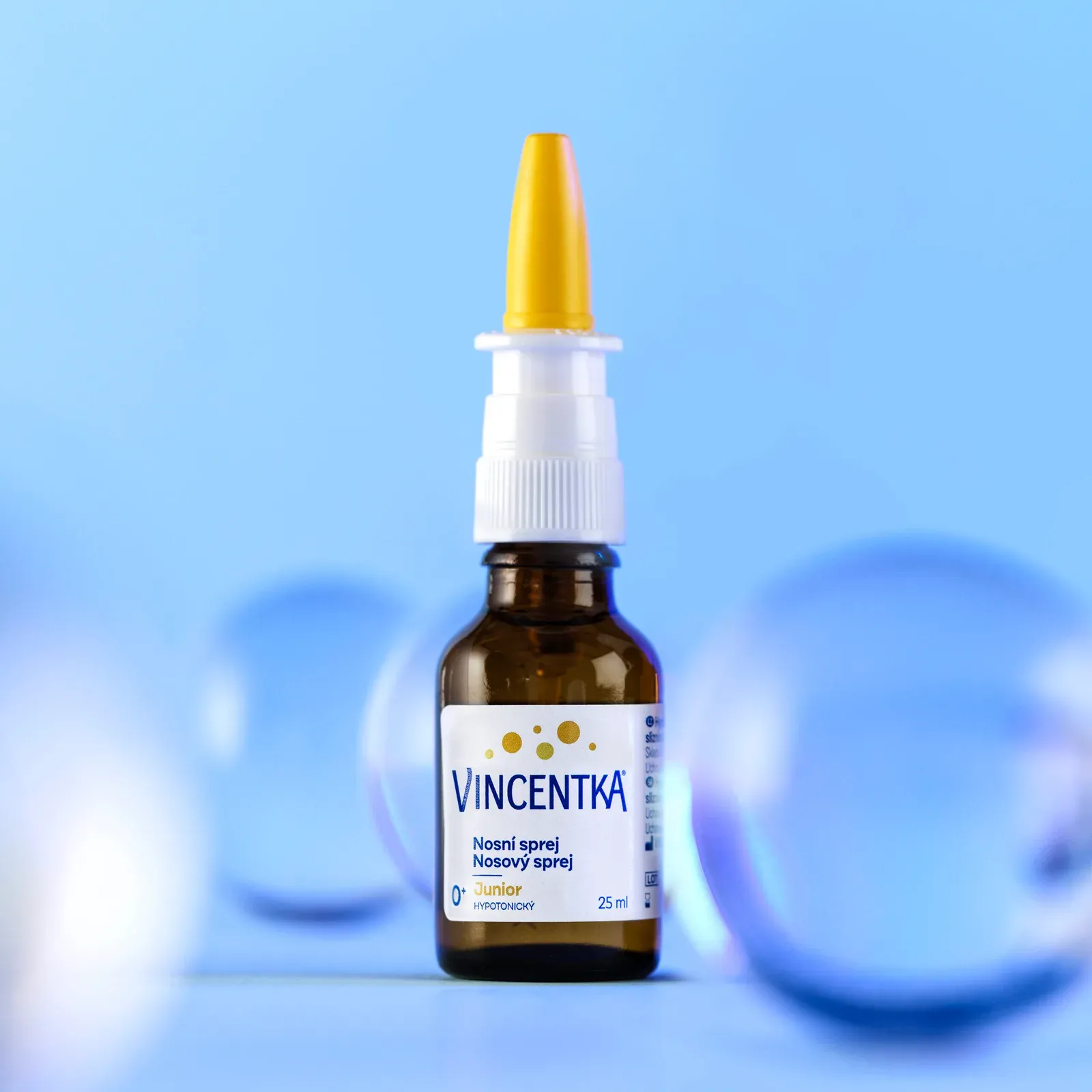
The Vincentka nasal spray is hypotonic, so why can it be used long term and not just for a fortnight, as is usual with hypotonic sprays?
The boundary between an isotonic and a hypotonic solution is 300 mmol (the osmolality of blood plasma). Vincentka measures 265 mmol, and even that figure can drift slightly, so it is only mildly hypotonic. What makes the Luhačovice mineral waters exceptional is the balance between the sodium chloride component and the sodium hydrogen carbonate component, which comes from the original sea water. We have studies and reviews from ENT specialists comparing how well hyper-, iso- and hypotonic solutions are tolerated when used for rinsing and spraying. Apart from patients with an acutely blocked nose during a cold, patients rated the hypertonic solution as the worst tolerated. Between the hypotonic solution — Vincentka — and the isotonic one there was no significant difference. Vincentka came out as the best tolerated, among other things because even after prolonged use it causes none of the side effects of vasoconstrictive drops, the so-called alpha sympathomimetics.
Can I use the Vincentka nasal spray on a ten-month-old child?
Since this is pure mineral water from a natural medicinal spring with nothing added, it can be used in infants too, but great care is needed during application so as not to injure the child. It is best used without inserting the spray into the nostril, holding it close instead.
Does the nasal spray help with pollen allergies too?
The nasal spray helps maintain the physiological cleansing capacity of the nasal lining and lets mucosal immunity work at its best. As far as we know, allergists recommend it for managing the troubles of pollen and dust allergies. There is no limit on how long or how often a day it may be used.
Did not find your answer?
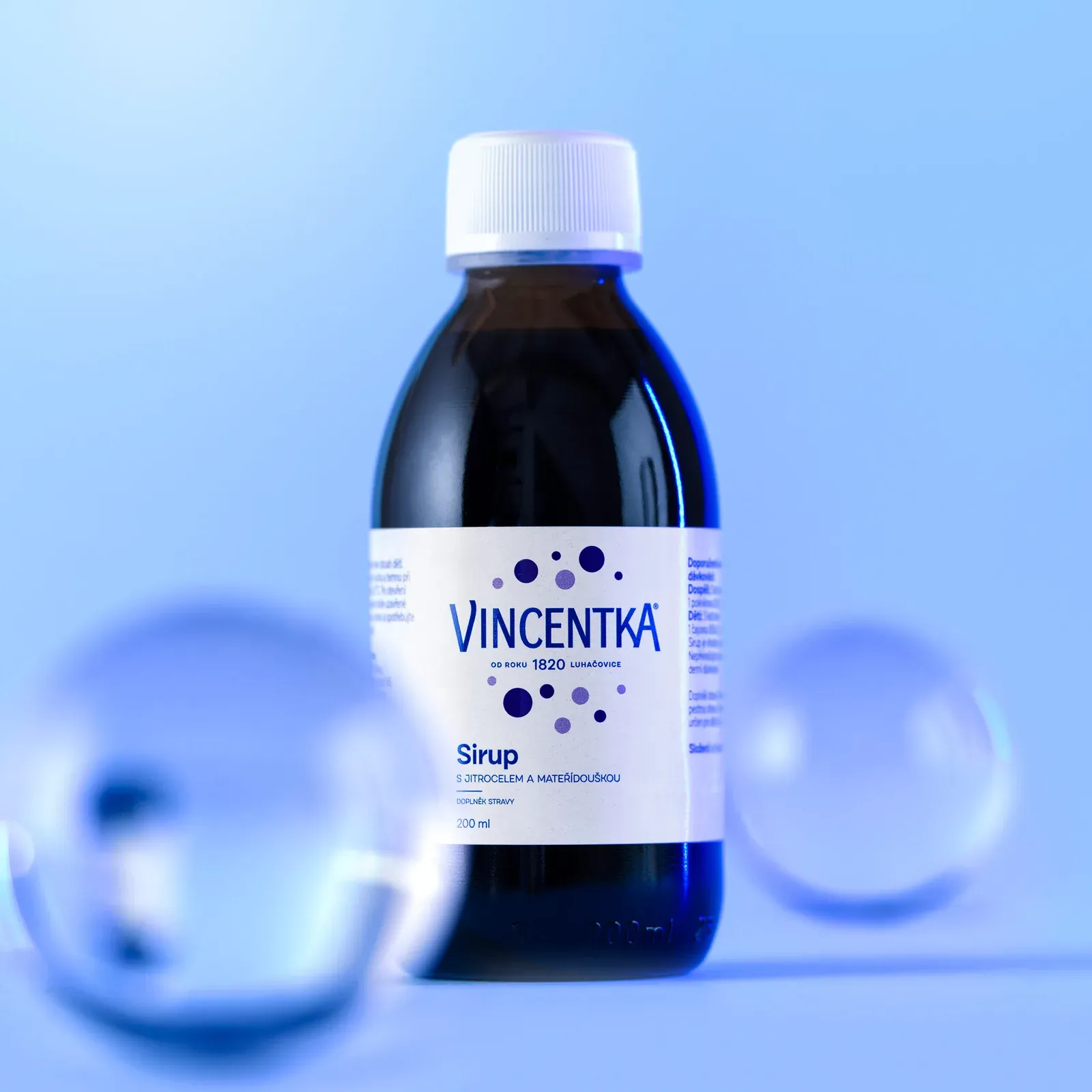
Is the syrup suitable for infants and children under three?
The syrup contains Vincentka mineral water from a natural medicinal spring, extracts of wild thyme and ribwort plantain, invert sugar, and it is preserved with potassium sorbate. Food supplements are generally approved only from the age of three. Your child’s doctor is best placed to advise whether the child can already take this preservative.
Is the syrup suitable during pregnancy?
If you keep to the recommended daily amount stated on the box, there is no need to worry about taking the syrup during pregnancy either.
Did not find your answer?
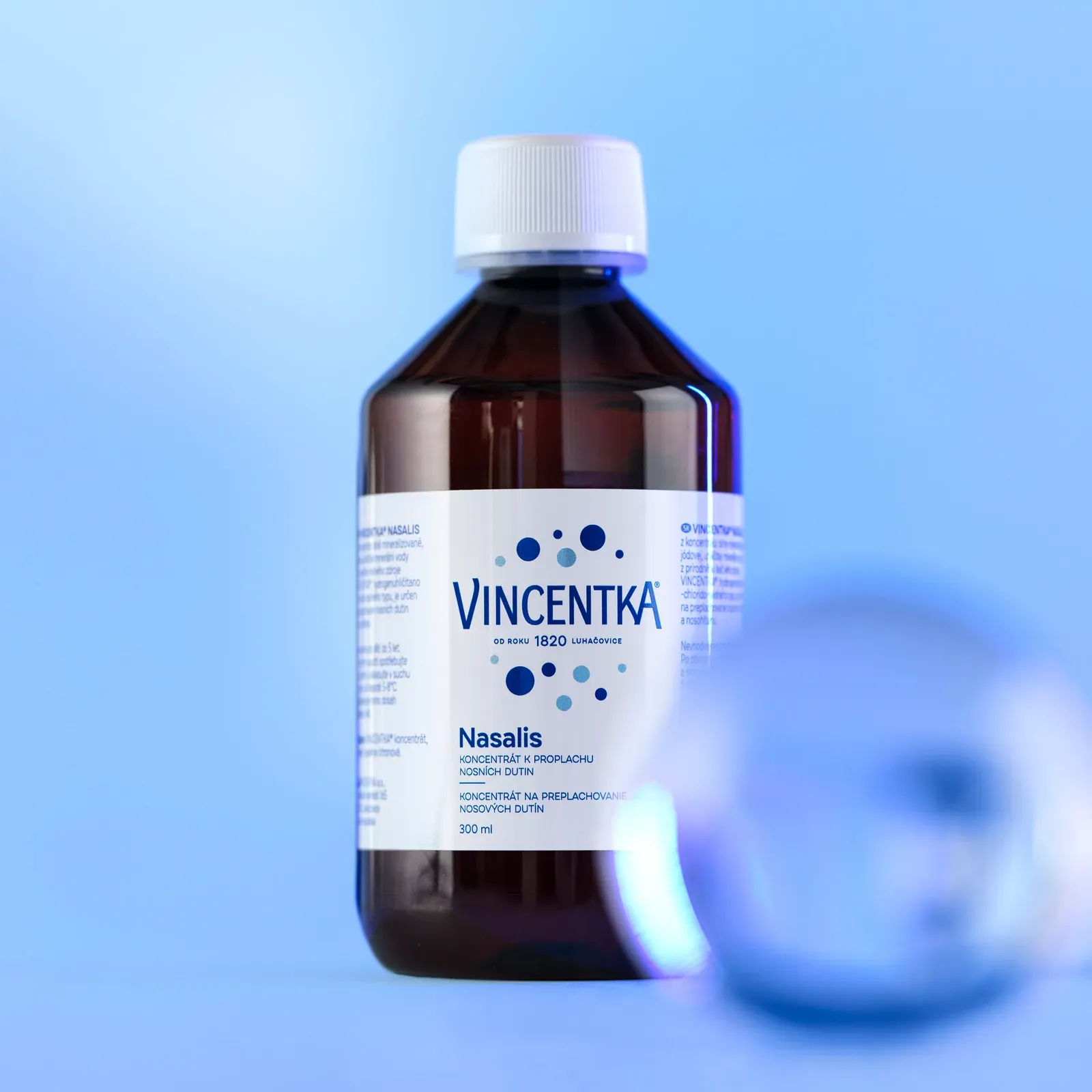
Can I use Vincentka Nasalis for inhalation?
Vincentka Nasalis is not intended for inhalation and we do not recommend using it that way. For inhalation, use only bottled Vincentka.
Did not find your answer?
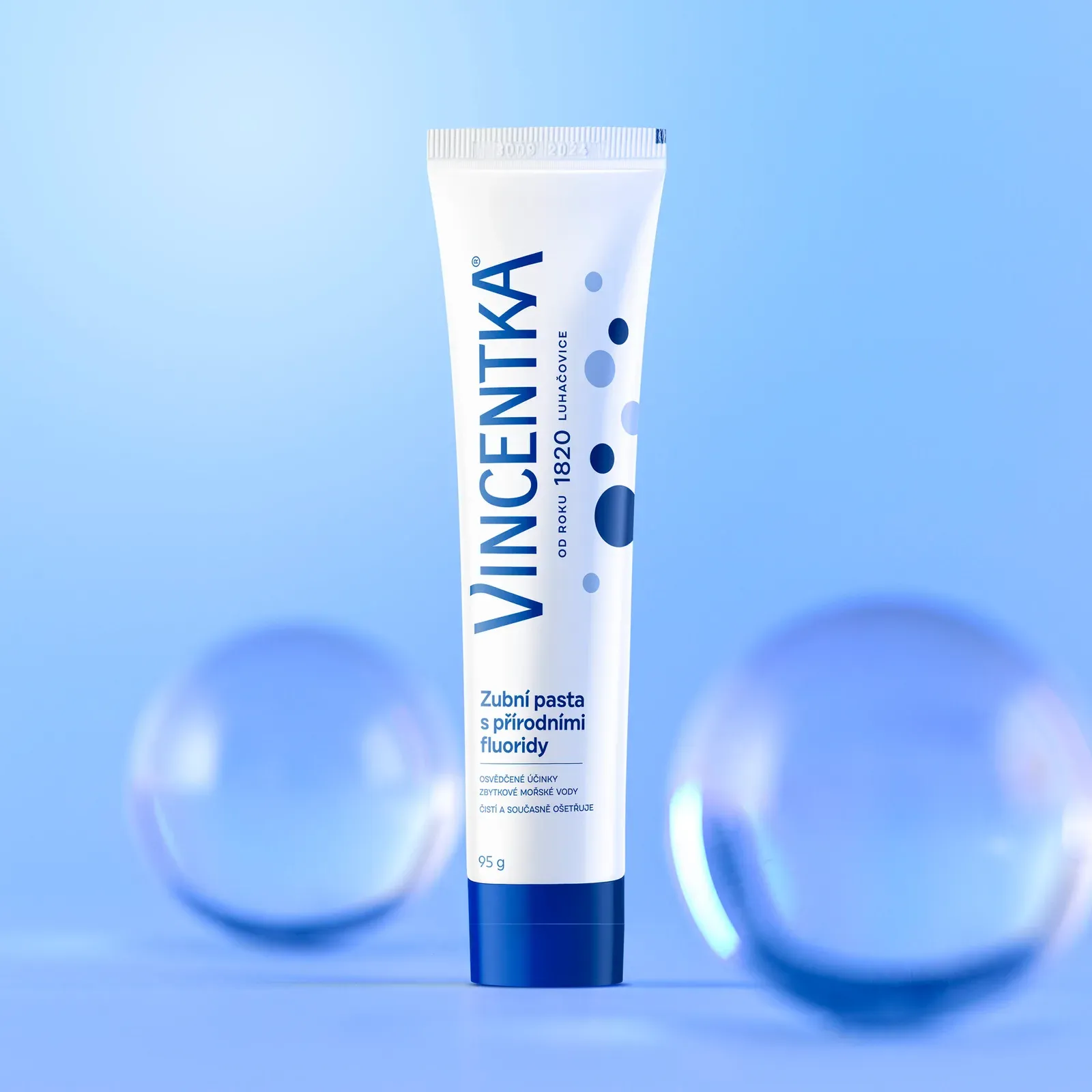
Does Vincentka toothpaste taste salty?
Vincentka toothpaste has a mild fruit flavour with a pronounced fresh effect, with neither a salty nor a sweet taste. It foams strongly.
Is the toothpaste suitable for a five-year-old?
The toothpaste contains an increased amount of natural fluorides and other important minerals and trace elements. If the child does not swallow the foam while brushing, it is suitable.
Why is the toothpaste not sold in drugstores?
Because of the significant share of concentrated mineral water from a natural medicinal spring, we consider pharmacies the more appropriate place to sell it.
Did not find your answer?
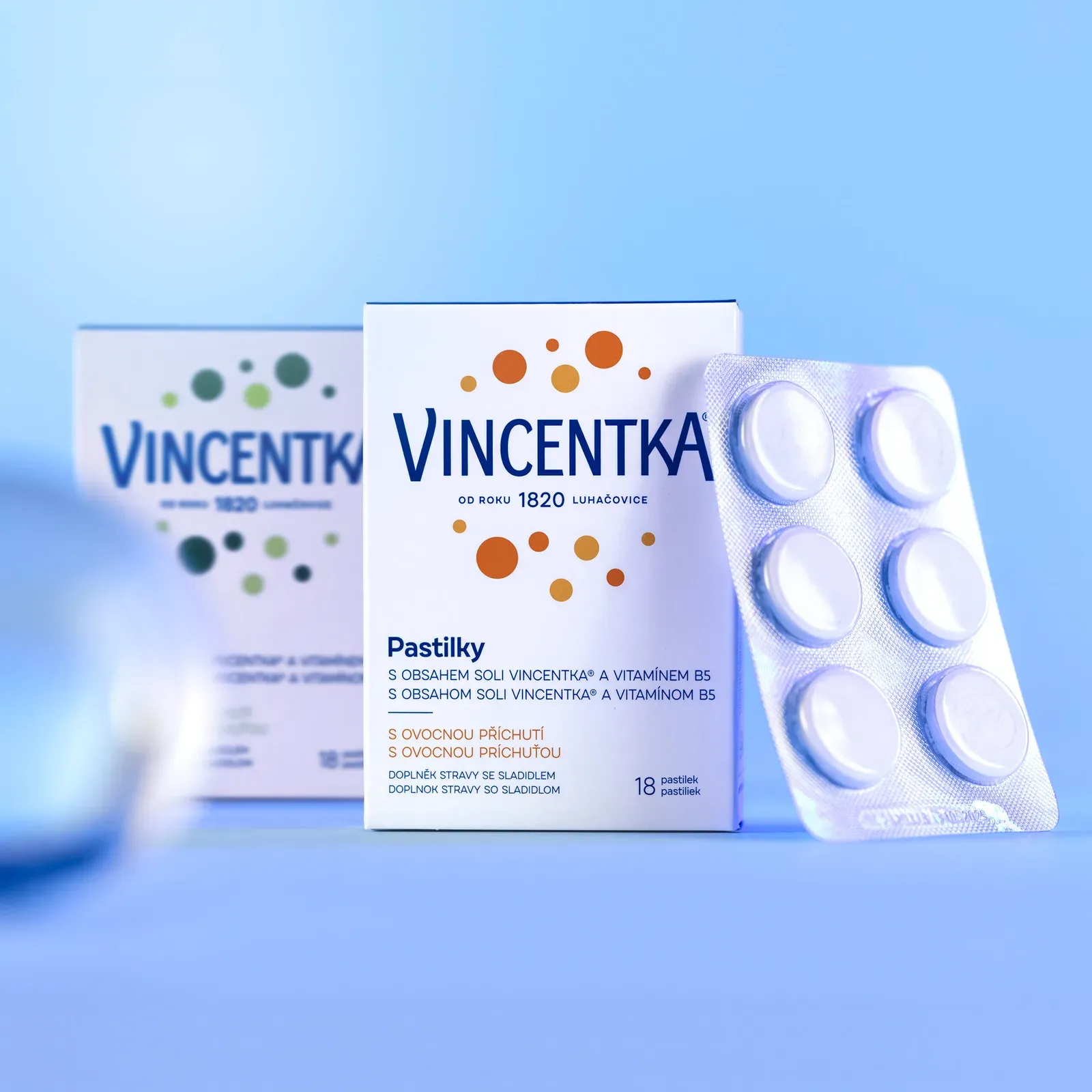
Why are the lozenges not suitable for children under three?
Food supplements are generally intended for children from the age of three. Use in younger children can be discussed with the child’s doctor on the basis of the composition stated on the box.
Can I take the lozenges in the fourth month of pregnancy?
Yes, the lozenges suit pregnant women as well, but they are unsuitable for people on a restricted salt intake — see the package leaflet.
Did not find your answer?